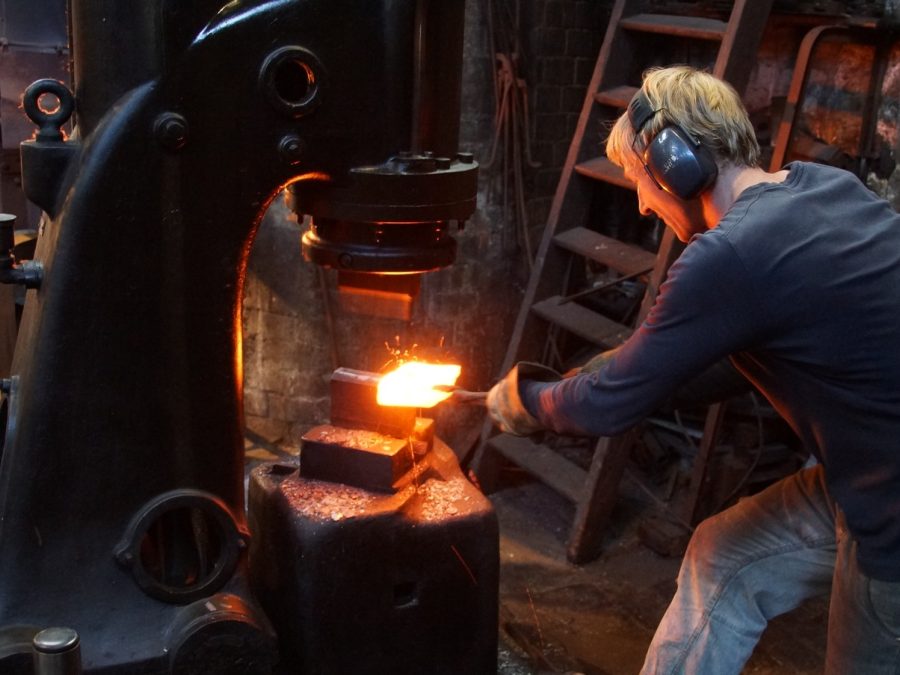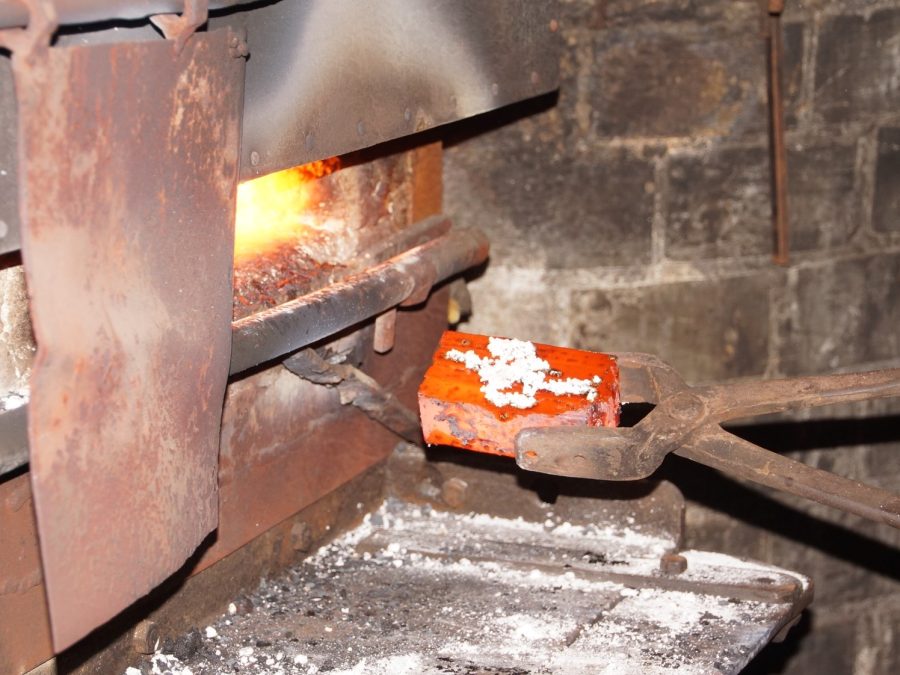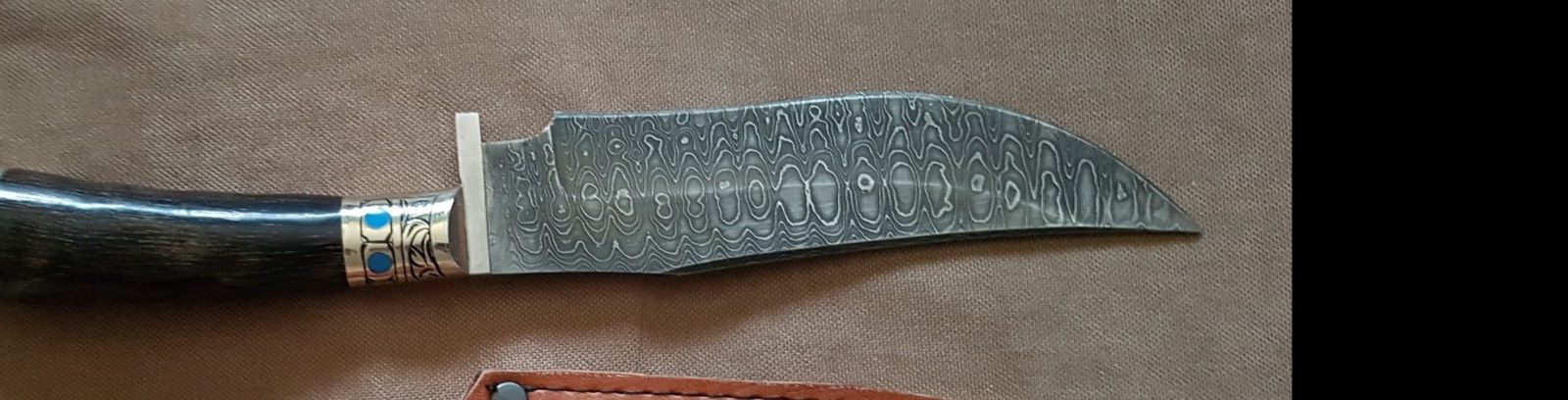
“300 layers” sounds precise, but the actual number depends entirely on how many times a billet was folded and how evenly it drew out under the hammer — miscounted or uneven folds, and a billet nominally at five folds can land anywhere from 200 to over 300 layers depending on how consistently it welded each pass. We count folds as we go rather than reverse-engineering a layer count from a finished pattern, because by the time the billet is drawn out and etched, the number is much harder to verify than to have simply tracked from the start.
More layers isn’t automatically better, either — past a certain point, additional folds mostly refine the visual pattern rather than meaningfully changing the steel’s mechanical behavior, since 1084 and 15N20 are both already fully alloyed before the first weld. We fold until the pattern reads the way we want it to for a given design, not to an arbitrary round number that looks good on a spec sheet.